
Design & Mfg — Aerospace
Introduction
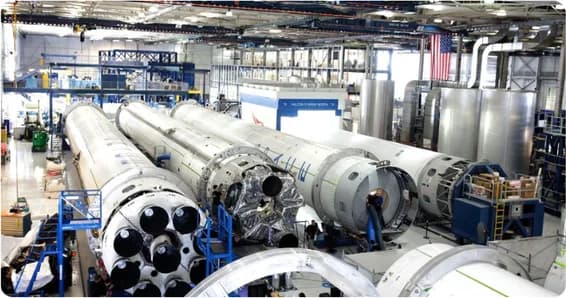
The aerospace industry has always stood at the forefront of engineering innovation. From commercial aircraft and military platforms to satellites and next-generation urban air mobility (UAM) vehicles, aerospace products demand an extraordinary combination of performance, reliability, safety, and efficiency. However, as aircraft become lighter, smarter, and more sustainable, the challenges associated with transforming advanced designs into manufacturable products continue to grow.
Manufacturing engineers today are expected to bridge the gap between ambitious engineering concepts and practical production realities. They must ensure that complex aerospace components can be produced consistently, economically, and in compliance with stringent regulatory requirements, all while supporting faster development cycles and increasing customization.
Successfully addressing these challenges requires integrating Design for Manufacturability (DFM), digital engineering, simulation, automation, and advanced manufacturing technologies from the earliest stages of product development. This article explores the major design and manufacturability challenges in aerospace and highlights the strategies manufacturers are adopting to overcome them.
The Evolving Complexity of Aerospace Manufacturing
Modern aerospace systems are significantly more sophisticated than previous generations. New aircraft incorporate lightweight composite structures, high-temperature superalloys, titanium-intensive assemblies, complex electronic systems, embedded sensors, electric propulsion technologies, and autonomous flight capabilities.
These innovations improve aircraft performance but also increase manufacturing complexity.
Unlike high-volume automotive manufacturing, aerospace production typically involves low-volume, high-mix manufacturing. Components often feature intricate geometries, extremely tight tolerances, and demanding quality standards. Every manufacturing decision has implications for structural integrity, certification, cost, and production efficiency.
Consequently, manufacturability can no longer be considered only after product design, it must become a core design objective.
Major Design and Manufacturability Challenges
- Increasing design complexity
- Material challenges
- Tight tolerances and precision requirements
- Assembly complexity
- Regulatory compliance
The Role of Design for Manufacturability (DFM)
Design for Manufacturability has become an essential engineering discipline. Rather than optimizing solely for product performance, DFM evaluates whether components can be manufactured efficiently and consistently.
Key DFM principles include:
- Simplifying component geometry
- Reducing part count
- Standardizing features
- Improving machining accessibility
- Designing for automated assembly
- Selecting manufacturing-friendly materials
- Minimizing inspection complexity
Early DFM collaboration significantly reduces engineering changes later in development.
Digital Engineering as a Manufacturing Enabler
Digital transformation is reshaping aerospace manufacturing. Manufacturing engineers increasingly rely on digital engineering tools that connect design, simulation, manufacturing, and quality into a unified workflow.
These technologies include digital twins, Model-Based Definition (MBD), Product Lifecycle Management (PLM), manufacturing simulation, virtual commissioning, manufacturing execution systems, and real-time production monitoring.
Digital continuity enables manufacturing teams to identify production issues long before physical prototypes are built.
Advanced Manufacturing Technologies
Additive manufacturing has become one of the most disruptive technologies in aerospace. Benefits include lightweight lattice structures, part consolidation, reduced assembly complexity, material savings, rapid prototyping, and shorter lead times.
However, additive manufacturing introduces new challenges involving build orientation, residual stresses, surface finishing, process qualification, inspection methods, and certification.
Manufacturing engineers must determine when additive manufacturing provides genuine production advantages over conventional methods.
Automation is expanding rapidly throughout aerospace manufacturing. Applications include robotic drilling, automated fastening, composite layup, material handling, laser inspection, coordinate measurement, and automated painting.
Automation improves repeatability, worker safety, productivity, process consistency, and data collection. Successful implementation depends on designing components and manufacturing processes with automation in mind.
Looking Ahead
The future of aerospace manufacturing will be defined by increasingly digital, connected, and intelligent production systems. Emerging technologies such as generative design, autonomous robotics, industrial artificial intelligence, digital twins, and hybrid manufacturing will continue to transform how aircraft are designed and built.
For manufacturing engineers, success will depend not only on mastering advanced production technologies but also on influencing product design from the earliest stages. By embracing Design for Manufacturability, digital engineering, and data-driven decision-making, engineers can reduce development risk, improve production efficiency, and deliver the high levels of quality and reliability demanded by the aerospace industry.