
Shafts in Robotics: Transmitting Rotational Motion Through Design for Manufacturing and Assembly (DFMA)
In many mechanical components that constitute a robotic system, the shaft is often regarded as one of the simplest. At first glance, it appears to be nothing more than a cylindrical metal rod connecting a motor to a gearbox or a wheel. However, this seemingly simple component plays a fundamental role in determining the performance, reliability, and manufacturing cost of a robot. Every robotic joint that produces rotational motion relies on a shaft to transmit torque from the actuator to the driven mechanism while maintaining precise alignment between rotating elements. Whether in an industrial robotic arm, a collaborative robot, an autonomous mobile robot, or a surgical robot, shafts serve as the mechanical link that enables controlled and efficient motion.
In robotics, positional accuracy is measured in fractions of a millimeter, while dynamic performance depends on smooth, vibration-free operation. A poorly designed shaft can introduce excessive deflection, vibration, backlash, bearing failure, or fatigue cracks, all of which degrade the robot's accuracy and operational life. Consequently, shaft design is not simply a matter of selecting an appropriate diameter; it involves balancing strength, stiffness, weight, manufacturability, assembly efficiency, and long-term reliability. From a Design for Manufacturing and Assembly (DFMA) perspective, these considerations become even more important because the shaft must not only perform mechanically but also be economical to produce and easy to integrate into the overall robotic assembly.
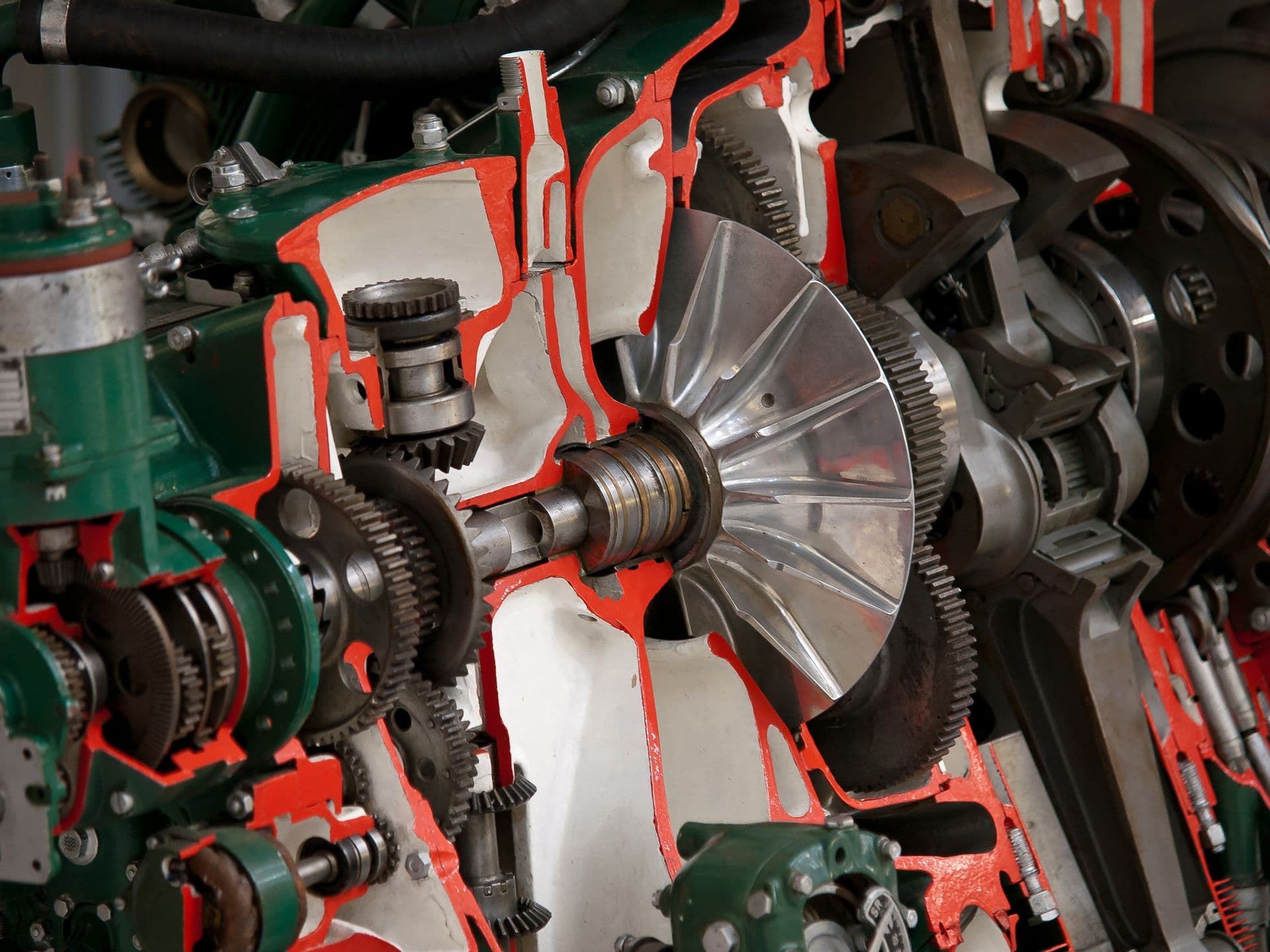
The primary function of a shaft is to transmit rotational motion and torque between mechanical components. In a typical robotic joint, the electric servo motor generates rotational motion, which is transferred through the motor shaft to a reduction gearbox, such as a planetary gearbox or harmonic drive. The gearbox increases torque while reducing speed, and the output shaft delivers this amplified torque to the robotic link or end effector. Throughout this process, the shaft must withstand torsional loads caused by transmitted torque, bending loads arising from external forces and component weights, and dynamic loads generated during acceleration, deceleration, and repetitive motion. Since robotic systems often operate continuously for millions of cycles, fatigue resistance becomes one of the most critical design considerations.
Material Selection
Material selection plays a decisive role in shaft performance. Medium-carbon steels such as AISI 1045 are commonly used in general-purpose robotic applications because they provide a good balance between strength, machinability, and cost. For industrial robots subjected to higher torque and cyclic loading, alloy steels such as AISI 4140 or 4340 are preferred due to their superior fatigue strength and toughness. In environments requiring corrosion resistance, including medical and food-processing robots, stainless steels such as 304, 316, or precipitation-hardened 17-4 PH stainless steel are frequently employed. Lightweight robots designed for high-speed operation may utilize aluminum alloys or titanium to reduce rotational inertia, although these materials require careful consideration of stiffness and manufacturing costs. The material selection process therefore extends beyond mechanical strength and must account for the robot's operating environment, production volume, expected service life, and economic constraints.
Manufacturing Considerations
Manufacturing considerations significantly influence shaft design. Most robotic shafts are produced through CNC turning, which provides high dimensional accuracy, excellent concentricity, and efficient production for cylindrical geometries. Additional machining operations, including milling, grinding, threading, and keyway cutting, are performed only where functional requirements demand them. Precision bearing seats, for example, are typically ground to achieve tight tolerances and superior surface finishes that ensure smooth bearing operation and long service life. Heat treatment processes such as induction hardening, carburizing, or nitriding are often applied to improve wear resistance without compromising the shaft's core toughness. Every additional machining operation, however, increases production time, tooling requirements, and manufacturing cost. Consequently, modern shaft design emphasizes simplicity by eliminating unnecessary geometric features while preserving mechanical functionality.
Design for Manufacturing (DFM)
The Design for Manufacturing (DFM) philosophy encourages engineers to simplify shaft geometry whenever possible. A shaft with numerous diameter changes, deep grooves, complex splines, and multiple threaded sections requires longer machining cycles, specialized tooling, and more extensive quality inspection. In contrast, a shaft designed with standardized diameters, generous fillet radii, and commonly available thread sizes can often be manufactured using fewer machining operations and standard cutting tools. Standardization also reduces inventory costs because manufacturers can utilize common bearings, retaining rings, couplings, and seals across multiple robotic platforms. By reducing manufacturing complexity, engineers not only decrease production costs but also improve dimensional consistency and overall product quality.
Design for Assembly (DFA)
Design for Assembly (DFA) extends these principles by focusing on how the shaft integrates into the robotic system. During assembly, shafts must align accurately with bearings, gears, couplings, and rotary encoders. Features such as chamfers, lead-in surfaces, and integrated locating shoulders simplify insertion while minimizing the risk of damaging precision components. The number of separate assembly parts can also be reduced by incorporating functional features directly into the shaft. For example, instead of using multiple spacers and collars, carefully machined shoulders can position bearings and gears accurately while reducing assembly time and the likelihood of assembly errors. Such simplifications are particularly valuable in mass-produced robotic systems, where even a small reduction in assembly time can translate into substantial cost savings over thousands of units.
Another important DFMA consideration involves balancing mechanical performance with manufacturing precision. Engineers often specify unnecessarily tight dimensional tolerances for non-critical shaft features, believing that greater precision always results in better performance. In reality, excessive tolerances increase machining costs, inspection time, and component rejection rates without providing meaningful functional benefits. A well-designed robotic shaft applies tight tolerances only where necessary, such as bearing journals, seal interfaces, and encoder mounting surfaces, while allowing less critical dimensions to be manufactured using standard tolerances. This functional approach to tolerancing represents one of the core principles of DFMA and contributes significantly to cost-effective manufacturing.
Weight Reduction
Weight reduction has become another major objective in modern robotic shaft design. Lower rotating mass reduces inertia, enabling faster acceleration, lower energy consumption, and improved dynamic response. Hollow shafts are increasingly employed in collaborative robots and lightweight robotic arms because they achieve comparable torsional stiffness with significantly less material than equivalent solid shafts. In addition, hollow shafts provide internal passages for electrical cables, pneumatic tubing, and sensor wiring, eliminating external cable routing and simplifying the mechanical architecture of the robot. Although hollow shafts are generally more expensive to manufacture, their system-level advantages often outweigh the additional production costs, particularly in high-performance robotic applications.

Common Failure Mechanisms
Despite their apparent simplicity, shafts remain susceptible to several failure mechanisms. Fatigue cracking caused by cyclic loading is one of the most common failures in robotic joints, particularly near shoulders, keyways, or sharp geometric transitions where stress concentrations develop. Misalignment between bearings and shafts can increase friction and vibration, accelerating wear throughout the drivetrain. Inadequate surface finish on bearing journals may reduce bearing life, while improper heat treatment can produce brittle surfaces that fracture under impact loading. These failure modes highlight the importance of integrating sound mechanical design with manufacturing and assembly considerations throughout the product development process.
The Future of Shaft Design
As robotics continues to evolve, shaft technology is advancing alongside it. High-strength alloys, composite materials, additive manufacturing, and integrated sensing technologies are enabling the development of lighter, stronger, and more intelligent shaft designs. Researchers are exploring sensor-integrated shafts capable of measuring torque, strain, and vibration in real time, allowing predictive maintenance and continuous health monitoring of robotic systems. Simultaneously, digital engineering tools such as finite element analysis (FEA) and digital twins enable engineers to optimize shaft geometry for both structural performance and manufacturability before physical prototypes are produced.
Conclusion
In conclusion, the shaft is far more than a simple rotating component within a robotic system. It is a critical mechanical element that directly influences power transmission, positioning accuracy, structural integrity, manufacturing cost, and assembly efficiency. By applying Design for Manufacturing and Assembly principles from the earliest stages of product development, engineers can create shafts that are not only mechanically robust but also economical to produce, straightforward to assemble, and reliable throughout their operational life. As robotic systems demand higher precision, lighter structures, and greater production efficiency, thoughtful shaft design will remain an essential contributor to the performance and commercial success of future robotic technologies.