
Three Benefits of Urethane Casting
Urethane casting is one of the most efficient and cost-effective manufacturing processes for producing high-quality plastic parts in low to medium volumes. It is widely used by product designers, engineers, startups, and manufacturers to create prototypes, functional testing components, and short production runs without investing in expensive injection molding tooling.
Unlike traditional manufacturing methods, urethane casting uses silicone molds and polyurethane resins to replicate complex plastic components with excellent accuracy, surface finish, and mechanical properties.
This article explains the urethane casting process, its key stages, and the three major benefits that make it a preferred manufacturing solution.
What is Urethane Casting?
Urethane casting is a manufacturing technique that creates plastic parts by pouring liquid polyurethane resin into a silicone mold. The mold is produced from a high-quality master model, ensuring every casted component accurately replicates the original design.
This process is ideal for producing anywhere from a few parts to around 100 units, depending on the complexity of the design and mold durability.
Urethane Casting Process
Stage 1: Create the Master Pattern
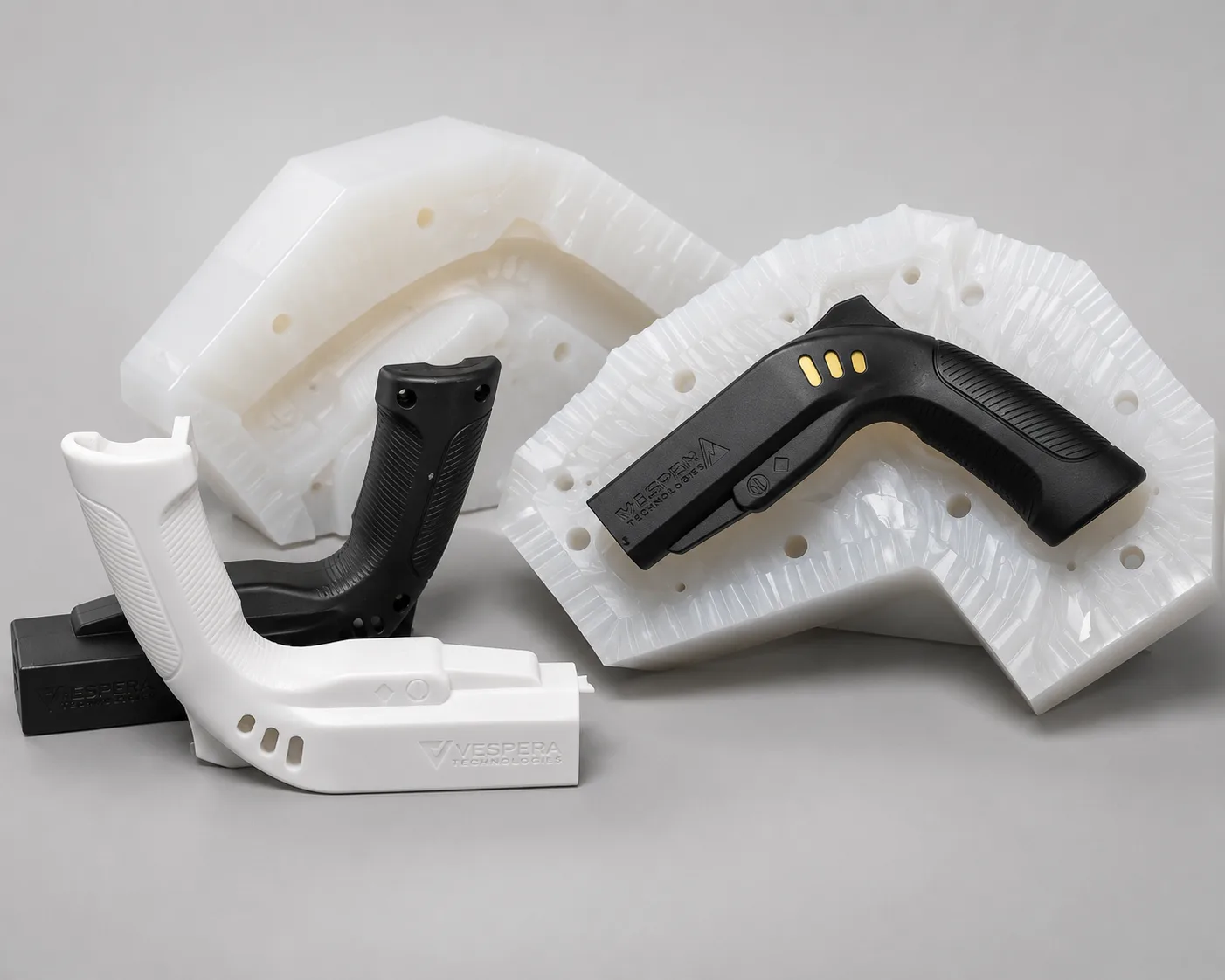
The first step involves producing a highly accurate master pattern. This master can be manufactured using:
- 3D printing (SLA is the most common)
- CNC machining
- Existing production components
The quality of the master pattern directly influences the final product. Every detail—including texture, dimensions, lettering, and surface finish—is transferred to the silicone mold.
Purpose:
- Achieve dimensional accuracy
- Replicate complex geometries
- Produce high-quality surface finishes
Stage 2: Build the Silicone Mold
The completed master is placed inside a mold box where liquid silicone rubber is poured around it.
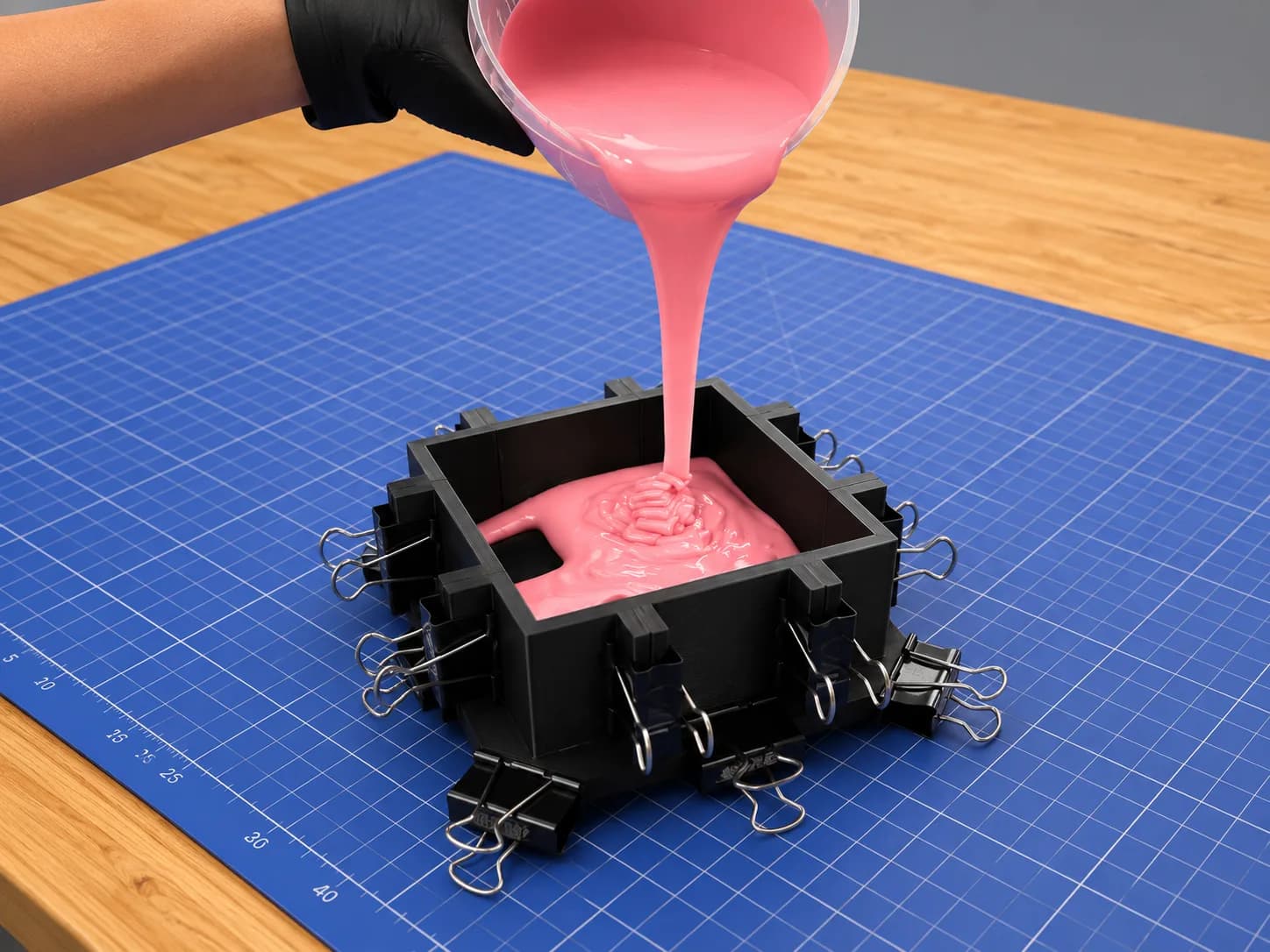
After curing, the silicone block is carefully cut open to remove the master, leaving behind a precise cavity that matches the original component.
Silicone molds are flexible, making it easier to remove intricate parts without damage.
Key Features
- Excellent detail reproduction
- Flexible mold material
- Suitable for complex undercuts
- Fast mold production
Stage 3: Vacuum Casting
Polyurethane resin is mixed and poured into the silicone mold inside a vacuum chamber.
The vacuum removes trapped air bubbles, ensuring:
- Bubble-free components
- Smooth surfaces
- High dimensional precision
- Consistent wall thickness
The resin fills every small detail within the mold.
Stage 4: Curing
The filled mold is placed in a controlled-temperature oven.
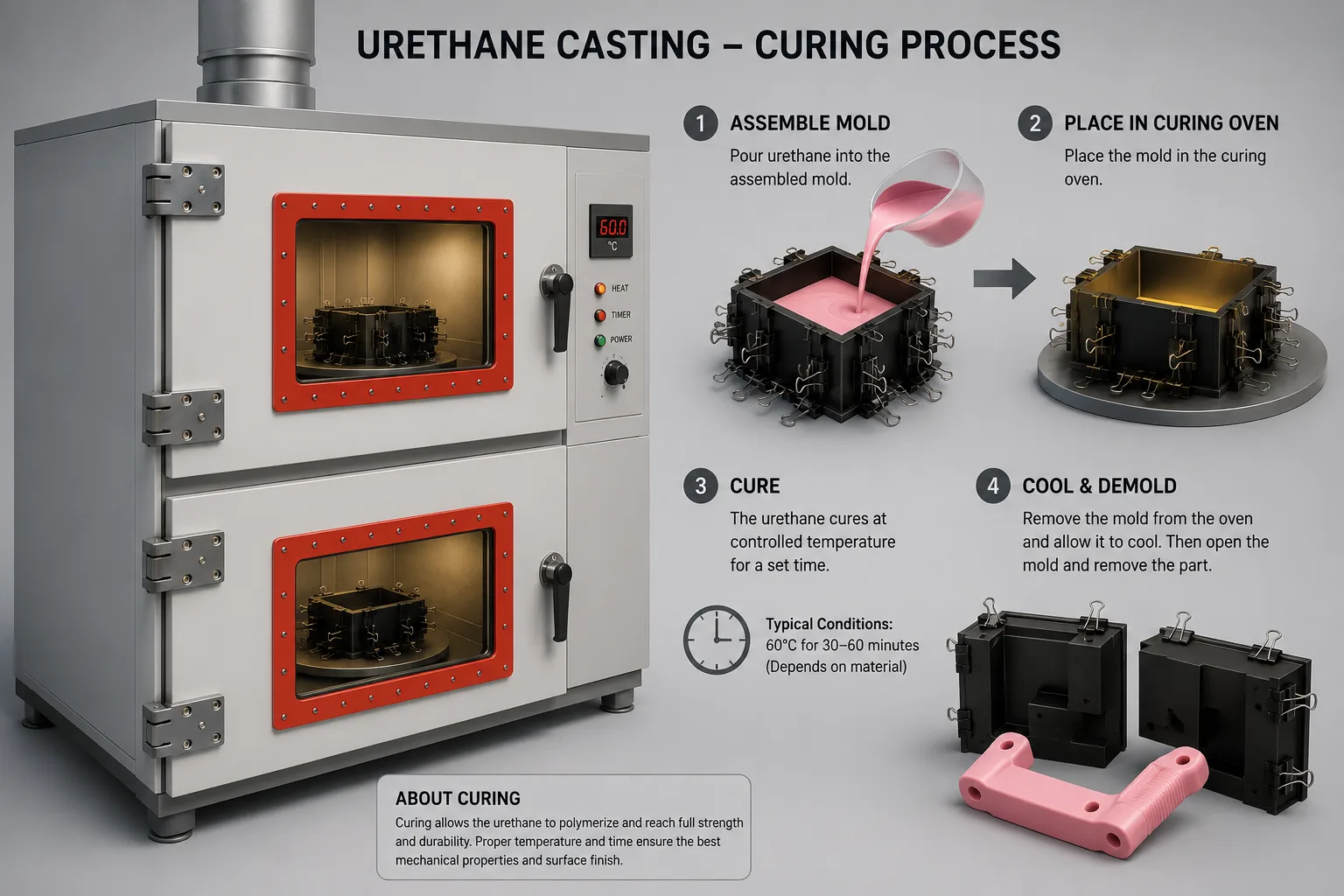
Depending on the material and part size, curing generally takes several hours. During curing, the polyurethane solidifies into a durable plastic component.
Stage 5: Demolding and Finishing
After curing:
- The silicone mold is opened.
- The finished part is removed.
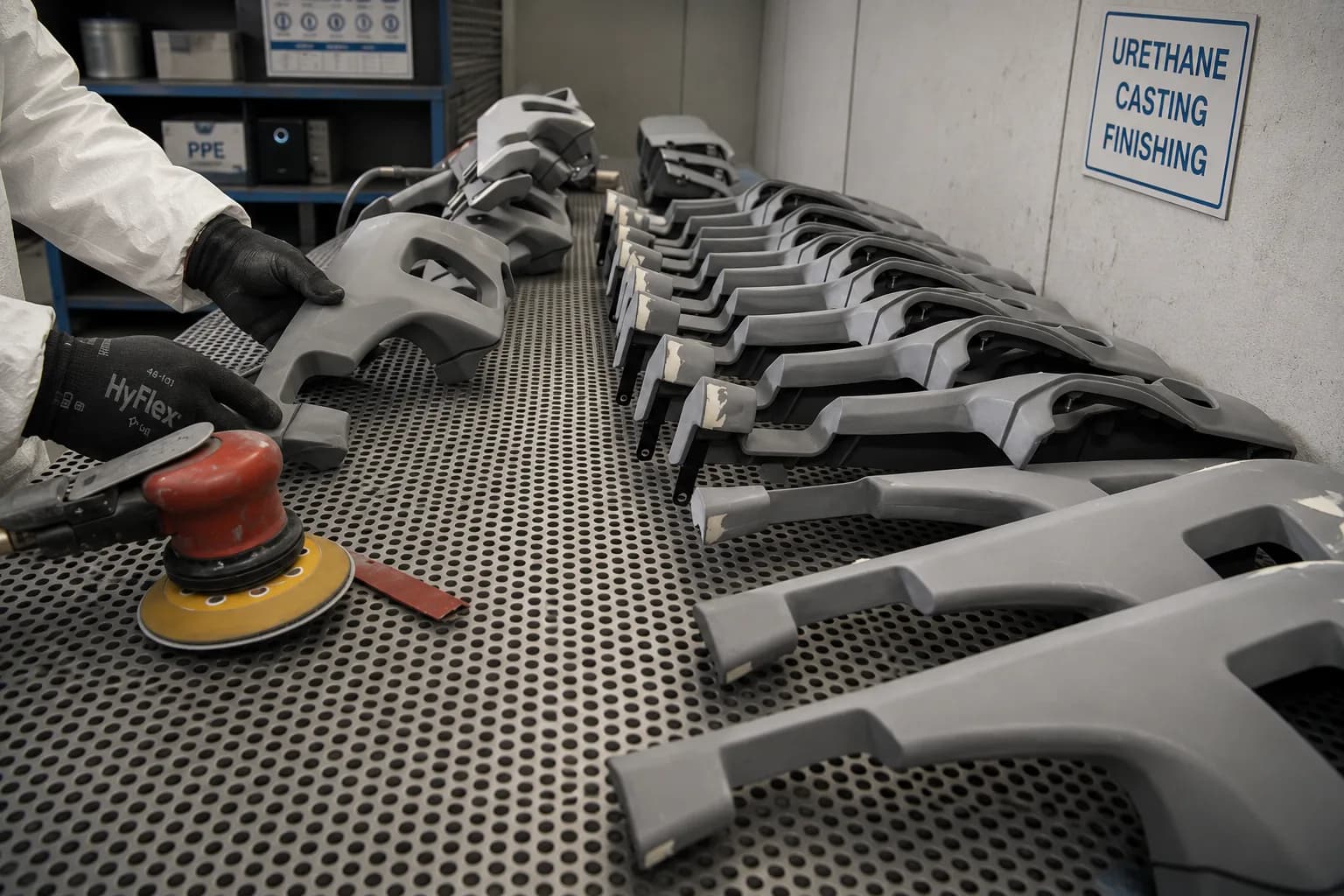
- Gates and excess material are trimmed.
- Surface finishing is completed.
Three Major Benefits of Urethane Casting
1. Cost-Effective for Low-Volume Production
One of the biggest advantages of urethane casting is its affordability.
Unlike injection molding, which requires expensive steel or aluminum tooling, urethane casting only requires silicone molds. This dramatically lowers upfront manufacturing costs.
Benefits
- Low tooling investment
- Reduced product development costs
- Ideal for startups
- Affordable prototype manufacturing
- Economical short production runs
2. Excellent Surface Finish and High Accuracy
Urethane casting reproduces extremely fine details from the master pattern.
This makes urethane casting suitable for:
- Consumer electronics
- Medical devices
- Automotive interiors
- Industrial products
3. Fast Production and Design Flexibility
Speed is another major advantage.
Injection molding can take several weeks or even months because of tooling design and manufacturing.
Urethane casting significantly shortens lead times.
Typical Timeline
- Master pattern: 1–3 days
- Silicone mold: 1–2 days
- Casting: 1–3 days
Common Materials Used
Several polyurethane resins are available to simulate different engineering plastics, including:
- ABS-like materials
- Polypropylene (PP)-like materials
- Polycarbonate (PC)-like materials
- Rubber-like elastomers
- Transparent materials
- High-temperature resins
Applications
Automotive
- Dashboard components
- Interior trims
- Air ducts
- Functional prototypes
Medical
- Diagnostic device housings
- Surgical equipment prototypes
- Medical enclosures
Consumer Electronics
- Electronic enclosures
- Wearable device housings
- Smart home products
Aerospace
- Cabin interior components
- Engineering validation models
Industrial Equipment
- Machine covers
- Functional housings
- Custom components
Urethane Casting vs. Injection Molding
| Feature | Urethane Casting | Injection Molding |
|---|---|---|
| Tooling Cost | Low | High |
| Production Volume | Low to Medium | High |
| Lead Time | Days | Weeks to Months |
| Design Changes | Easy | Expensive |
| Surface Finish | Excellent | Excellent |
| Best Use | Prototypes & Short Runs | Mass Production |
When Should You Choose Urethane Casting?
Urethane casting is an excellent choice when you need:
- Functional prototypes
- Small production batches
- Fast product development
- Cost-effective manufacturing
- High-quality cosmetic parts
- Design validation before investing in production tooling
It bridges the gap between rapid prototyping and full-scale manufacturing, enabling businesses to evaluate product performance while minimizing development costs.